Chipotle Allergen Menu
You want clear, practical help when ordering fast food with dietary needs. This guide to the Chipotle Allergen Menu shows how to make safer choices without promising a perfect result.
Read on to learn where to find up-to-date allergen info, which ingredients commonly trigger reactions, and quick phrases to use with staff. You’ll get step-by-step build-your-order cues: base → protein → toppings → sides.
The big three to watch here are dairy, wheat/gluten, and soy. They appear as cheese, flour tortillas, and sofritas or tofu on many dishes. The helpful upside: peanuts and tree nuts are not used as ingredients at most locations, which eases worry for nut-allergy households.
Remember suppliers and in-store practices can change. Treat the posted menu as your starting point and ask questions in-store to add a safety layer while you decide and order.
How the Chipotle Allergen Menu Helps You Order Safely in the United States
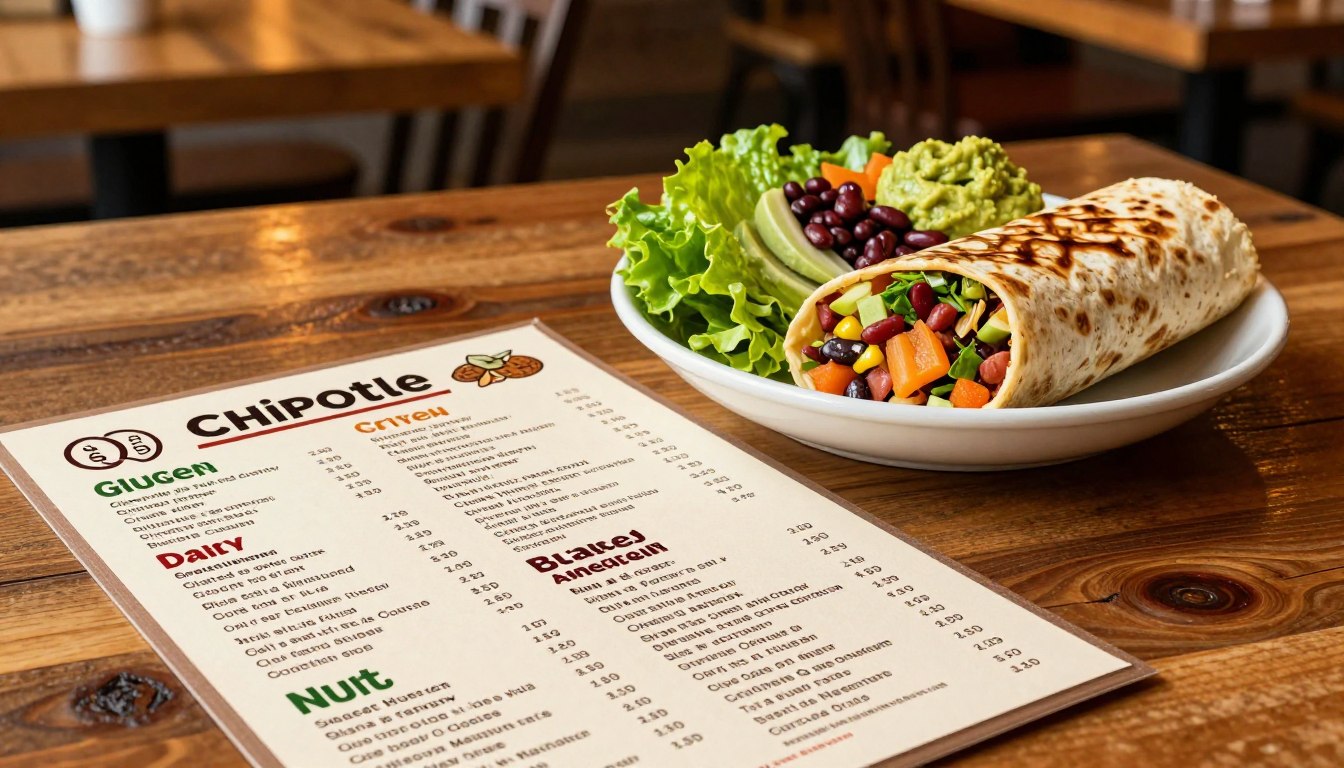
Before you step up to the line, the posted chart can guide safer ordering by listing which items contain common triggers. It highlights milk, wheat, and soy in plain terms so you can spot potential problems fast.
The chart can: help you identify which ingredients appear in each dish and reduce surprise exposures. It is a practical map for quick choices.
- What it cannot do: it cannot prevent cross-contamination from shared tools, surfaces, or nearby tortilla handling.
- Why locations differ: suppliers, staff training, and daily practices change by store and shift.
- Decision framework: mild allergy? The chart may suffice. Severe allergy or celiac disease? Use the chart plus a clear in-store protocol request.
- Talk to staff early and calmly. Ask for confirmation if you notice new seasonal ingredients.
| Best use | Limit | When to Escalate |
|---|---|---|
| Spot known ingredients | Can’t eliminate cross-contamination | Severe allergy or disease |
| Plan substitutions | Varies by location | Unexpected ingredient changes |
Use the chart to reduce risk and order with more confidence. It helps, but it stops short of a perfect guarantee in a busy kitchen.
Where to Find Real-Time Allergen and Special Diet Information
When you need current ingredient details, the company’s online diet resources are the quickest route. Start at the official Allergens & Special Diet page for up-to-date listings. Then use the nutrition calculator when you want to build a meal and double-check ingredients before you go.
Using official Allergens & Special Diet resources
The official page lists which items contain common triggers and any recent supplier updates. It is the best “right now” source for ingredient flags and special dietary notes.
Checking the nutrition calculator and online ordering notes
Use the nutrition tool to assemble your meal and confirm options. Add a short, clear note when you place an order online. Example: “ALLERGY—please change gloves and use clean utensils.”
What to ask for in-store
Before you reach the counter, check for limited-time proteins, new sauces, or dressings that can change allergens fast.
- Ask staff: “Can you confirm whether this contains dairy, wheat, or soy today, and can you use fresh gloves?”
- Request ingredient confirmation if a label, pan, or sauce looks different.
- For pickup, check the receipt/label and do a quick visual scan before eating.
| Resource | Use | Quick tip |
|---|---|---|
| Official diet page | Current ingredient listings | Check before you order |
| Nutrition calculator | Build and verify meal | Double-check sauces and tortillas |
| In-store staff | Confirm day-of ingredients | Ask for fresh gloves/utensils |
Know the Big Allergens at Chipotle: Dairy, Gluten, Soy, and More
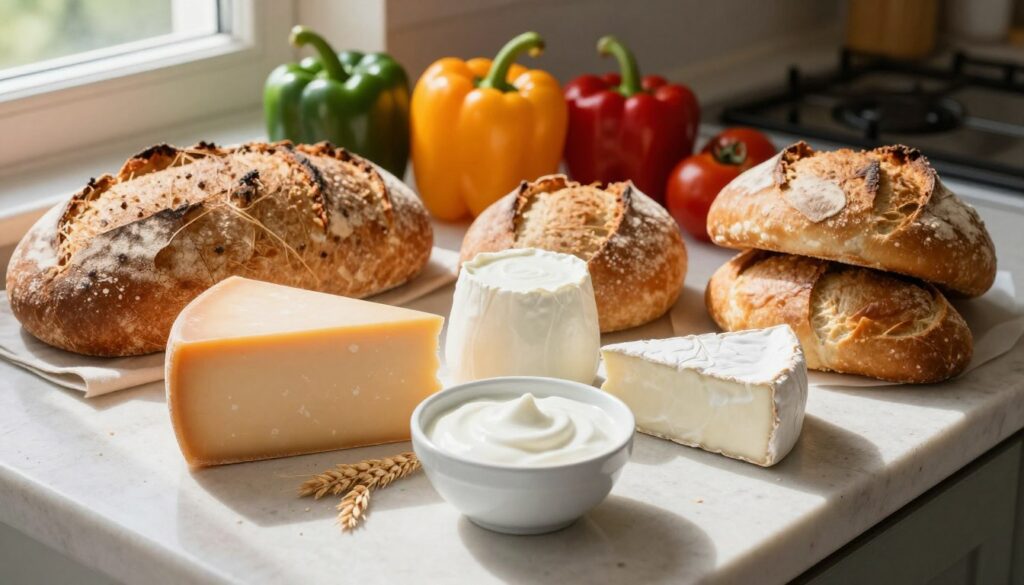
Know which common triggers appear most often so you can order with less guesswork.
Dairy at the counter: cheese, queso blanco, and sour cream
Dairy usually shows up as Monterey Jack cheese, queso blanco, and sour cream. These toppings can land on your food by default unless you ask otherwise.
Simple dairy-free move: say, “No cheese, no queso, no sour cream,” and watch the line fill your order accordingly.
Wheat and gluten: flour tortillas and what to choose instead
The main gluten source is the soft flour tortilla used for burritos and tacos. Choose bowls, salads, or corn tortillas as common substitutes.
Note: flour dust and handling can create cross-contact even when your bowl looks “gluten-free on paper.”
Soy: sofritas and other soy flags
Sofritas are tofu-based and contain soy. Some tortillas and dressings may list soy too. Verify day-of ingredients if soy is a concern.
- No peanuts, tree nuts, shellfish, or fish are used as ingredients per company info; still disclose severe allergies for safe handling.
- Corn can be a concern — chips, corn salsa, and corn tortillas contain corn.
- Extremely gluten-sensitive diners may worry about trace gluten in corn products.
| Allergen | Typical items | Quick swap |
|---|---|---|
| Dairy | Cheese, queso blanco, sour cream | No dairy toppings |
| Gluten | Flour tortilla | Bowl, salad, corn tortilla |
| Soy | Sofritas, some tortillas | Chicken, steak, beans |
For more details and safety tips, see this helpful overview: food allergy information.
Build a Safer Base: Bowls, Salads, Tacos, and Tortillas
Begin with a format that keeps flour away from your food when gluten or celiac disease is a concern. Your base choice matters. It changes how staff handle and plate your order.
Bowls and salads for gluten-free and celiac-focused ordering
Choose bowls or salads to avoid direct contact with flour. A bowl keeps ingredients contained. It lowers the chance a knife or tortilla touches your food.
Corn tortilla vs flour tortilla: how to choose
Flour tortillas contain wheat and are the clear gluten source. Corn tortilla is usually corn-based and is a common gluten-free option.
For celiac disease, still ask for fresh gloves and clean utensils. Open-line prep can cause cross-contact even with a corn tortilla or bowl.
- Default to a bowl when managing multiple sensitivities.
- For tacos, pick a corn tortilla and ask staff not to touch flour tortillas first.
- Decide using this quick checklist: allergy type, sensitivity level, shared-line comfort, extra controls.
| Base | Gluten Risk | Best for |
|---|---|---|
| Bowls | Low (no flour) | Gluten-free, families |
| Salads | Low (no flour) | Celiac disease caution with dressings |
| Corn tortilla | Lower (corn) | Tacos, gluten-sensitive diners |
| Flour tortilla | High (wheat) | Burritos, not for gluten avoidance |
Choose Proteins, Rice, Beans, and Veggies With Confidence
Focus on straightforward proteins, rice, and beans to make an allergy-aware meal fast and stress-free.
Most guests find a reliable middle ground with simple proteins like chicken, steak, barbacoa, or carnitas. These meat choices typically do not contain dairy, soy, or gluten. Still, tell staff if your sensitivity is severe so they can take extra care.
Know the vegan option and when to skip it
Sofritas is a tofu-based protein and fits vegan options well. Skip it if you avoid soy. For many readers, choosing a non-soy protein keeps the meal straightforward.
Rice and beans basics
White rice and brown rice are neutral bases. Black beans and pinto beans add protein and bulk without common dairy or wheat ingredients. Ask for a clean scoop to reduce cross-contact from nearby pans.
Low-risk add-ons
Fajita vegetables and romaine lettuce are easy, low-risk ways to add texture. They round out the plate without adding typical triggers.
- Pick chicken or steak when you want a simple protein choice.
- Ask for a fresh scoop for beans and rice to limit cross-contact.
- Watch for corn items: corn salsa, corn tortillas, and chips contain corn.
| Item | Typical risk | Best use |
|---|---|---|
| Chicken | Low | Safe protein choice |
| Sofritas | Contains soy | Vegan options |
| Pinto beans | Low | Filling, protein-rich base |
| Fajita vegetables | Low | Volume and texture |
Pick Salsas, Toppings, and Sides Without Unwanted Ingredients
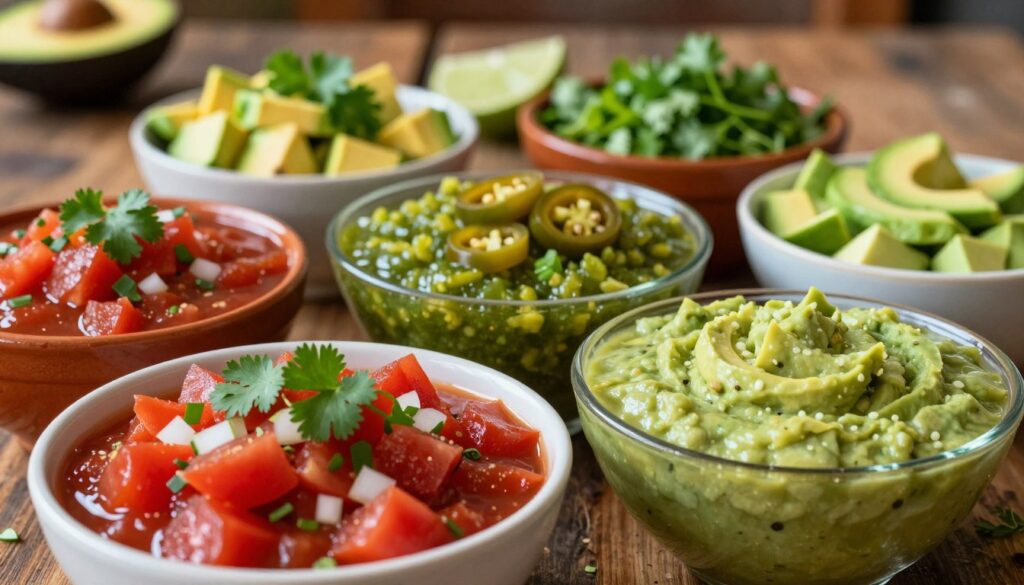
Pick salsas and sides that match your diet so your meal ends without surprises. Start by noting which salsa options are basic and which carry extra ingredients to check.
Simple salsa choices that fit many orders
Fresh Tomato Salsa, Tomatillo-Green, Tomatillo-Red, and Roasted Chili-Corn Salsa are the main salsa options. Fresh Tomato and the tomatillo salsas are low-risk for dairy and gluten.
Call out roasted chili-corn salsa when corn sensitivity matters. It highlights the corn factor plainly.
Guacamole, cheese, and sour cream: customize fast
Use a short script at the counter: “Yes guacamole, no cheese, no sour cream.” That keeps the line moving and reduces mistakes.
Chips and shared-fryer questions to raise
Chips are made from 100% corn and fried in sunflower oil. Still ask about handling and cross-contact if gluten exposure is a concern.
Quick question to ask: “Where are chips fried, and could flour tortillas touch those bins?” Say it calmly and politely.
Dressings and add-ons to double-check
Flag honey vinaigrette and other dressings before you add them. Honey vinaigrette can contain sulfites and other surprising ingredients. Verify any extra items you plan to include.
- Review the main salsa options to finish your bowl without surprises.
- Remember roasted chili-corn salsa if corn matters to you.
- Use the short custom script to confirm guacamole and remove dairy toppings.
- Ask about chips and frying to reduce gluten cross-contact risk.
| Item | Typical note | Quick ask |
|---|---|---|
| Salsa options | Fresh tomato/tomatillo are usually simple | “Which salsa has added ingredients?” |
| Chips | Corn-based, sunflower oil; cross-contact possible | “Where are chips fried?” |
| Dressings | Honey vinaigrette may contain sulfites | “Does this dressing contain sulfites?” |
Prevent Cross-Contamination When Ordering at Chipotle Mexican Grill
A quick disclosure at the counter can change how staff handle your food. Say it before anyone assembles your plate. That gives workers time to follow your request and lower cross-contamination risk.
What to say right away
Tell them you have an allergy or celiac disease and how severe it is. Try this short script: “I have celiac. This is severe. Can you change gloves and use clean utensils for my order?”
Ask for glove and utensil changes
Keep it calm and quick. Request fresh gloves and, if needed, ask staff to change gloves before touching your food. Say “please change gloves” once. Then name the ingredient you must avoid.
Top-of-pan ingredients and timing
Ask for ingredients from the top of the pan and fresh utensils from the back when possible. Visit during off-peak hours. Mid‑afternoon is often less busy and gives staff time to follow instructions.
When to involve a manager
Call a manager if the staff seems unsure or your reaction risk is high. Confirm the steps they will take, and make the choice that fits your health.
| Step | Why it helps | Quick phrase |
|---|---|---|
| Disclose allergy | Alerts staff to your risk | “I have a severe allergy.” |
| Change gloves | Reduces contact transfer | “Please change gloves.” |
| Fresh utensils/top pan | Limits shared-surface contact | “Use clean utensils and top pan items.” |
| Ask manager | Extra confirmation for high risk | “May I speak with a manager?” |
Allergy-Specific Ordering Playbooks for Common Dietary Needs
Simple scripts and swaps make ordering safer when you manage food sensitivities. Below are short, practical playbooks you can use at the counter or while placing an order online.
Gluten-free and celiac
Default to a bowl or salad and avoid the flour tortilla. Ask staff to change gloves and use clean utensils to limit flour contact.
Say: “I have celiac. Please use fresh gloves and utensils and no flour tortilla.”
Dairy-free or lactose intolerance
Skip cheese, queso blanco, and sour cream. Watch the finish step; dairy is often added last.
Say: “No cheese, no queso, no sour cream, please.”
Vegan build
Base your bowl on sofritas (if soy is fine), beans, fajita veggies, salsas, and guacamole. This keeps the meal plant-based and filling.
Say: “Vegan bowl with sofritas, beans, fajita veggies, salsas, and guac.”
Soy allergy
If you avoid soy, skip sofritas. Choose beans, vegetables, or meat proteins like chicken or steak and confirm dressings and tortillas.
Say: “No sofritas. Please confirm no soy in sauces or tortillas.”
Nut allergy
The brand reports no peanuts or tree nuts used as ingredients, but suppliers and procedures can change. Always disclose your allergy and confirm current practices.
Say: “I have a severe nut allergy. Please use fresh gloves and confirm no nut contact.”
- Keep a consistent safe order once you find it.
- Re-check when you try a new sauce, seasonal protein, or add-on.
| Need | Quick swap | Say it like this |
|---|---|---|
| Gluten-free | Bowl or salad; avoid flour tortillas | “Celiac—fresh gloves, no flour tortilla.” |
| Dairy-free | No cheese, queso, sour cream | “No cheese, no queso, no sour cream.” |
| Vegan | Sofritas (if okay), beans, veggies | “Vegan bowl with sofritas, beans, guac.” |
| Soy allergy | Skip sofritas; pick beans or meat | “No sofritas—confirm sauces and tortillas.” |
| Nut allergy | Confirm current practices despite no nuts used | “Severe nut allergy—please use fresh gloves.” |
Order With Confidence Using the Chipotle Allergen Menu Every Time
A short, repeatable checklist helps you pick safe food quickly and calmly.
First, check the official menu for known allergens and ingredients. Then pick a base and a simple protein you trust. Finally, confirm handling with staff to lower cross-contamination risk.
Keep a short list of go-to options, for example a bowl with chicken, rice, beans, and salsa. Use the same script each visit. Ask for glove and utensil changes, and call out any flour or dairy items you must avoid.
Visit off-peak when you need extra care. Re-verify when ingredients or items look new. With clear checks and a calm script, you can order more confidently and enjoy your meal while protecting your health.