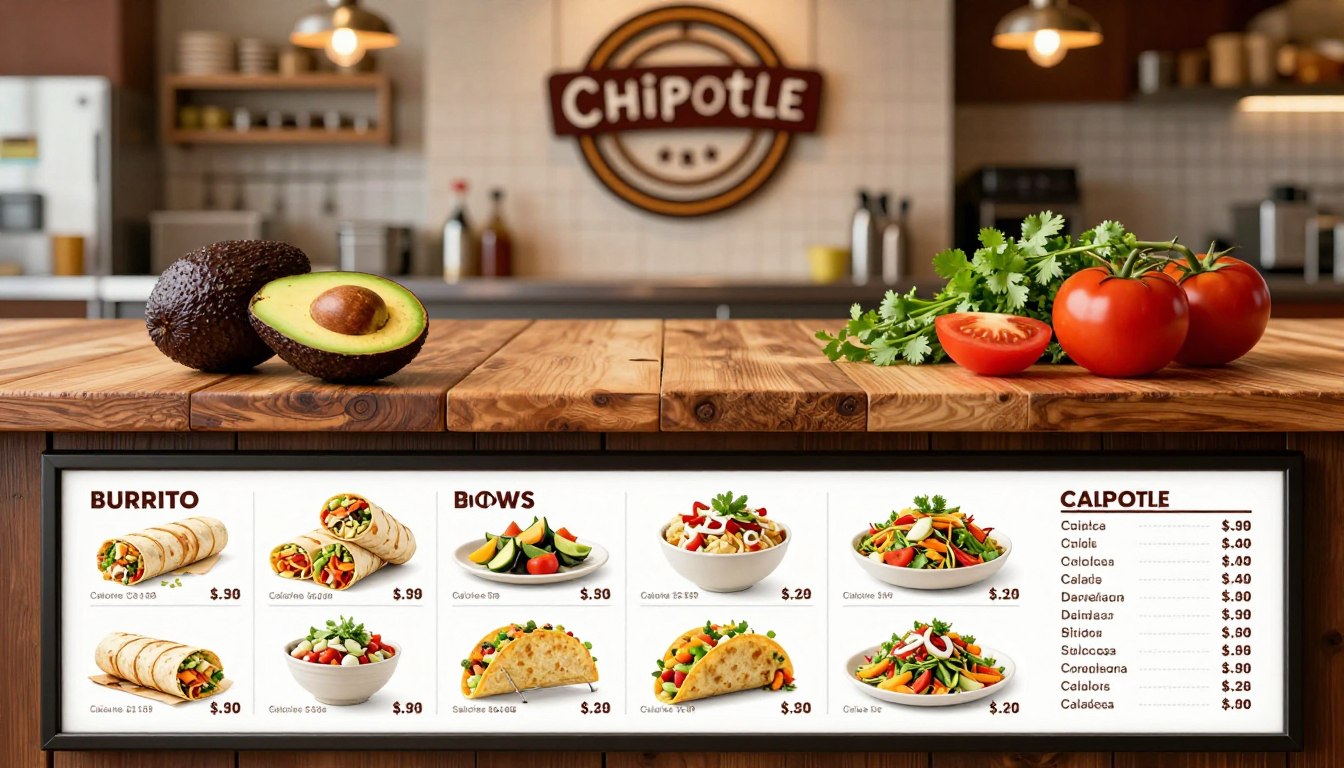
Chipotle Menu Calories
You’re about to get a clear, practical guide to building meals that fit your day. This intro sets expectations for bowls, burritos, tacos, salads, sides, dressings, and lifestyle builds you can order across the United States.
Because customization rules here, totals can move fast. Portioning and add-ons stack. We’ll show quick at-a-glance ranges and ingredient-level numbers so you can build a meal that works.
Big levers that change totals include tortilla choice, rice and beans, protein, cheese or queso, guacamole, chips, and dressing. You’ll also see how simple requests like “light rice” affect portions in real-world orders.
Practical builds will target goals like weight loss, muscle gain, keto, vegan, and paleo-style while keeping comfort and flavor front-and-center. Sodium is a common hidden issue, so we’ll track it alongside calories and macros.
The aim is grounded: enjoy familiar hand-rolled comfort while staying informed and confident when you order.
What “Chipotle Calories” Really Mean in 2026
Nutrition numbers on a label are estimates — real scoops tell the rest of the story.
Why customization changes calories, macros, and sodium fast
“Per serving” on the official list is a standard scoop size. It helps compare items. But scoops at different locations can vary by up to about 20%.
Adding rice raises carbs quickly. Queso or guacamole lifts fat. Extra meat increases protein and calories. Small swaps change totals more than you think.
Per serving vs. what you’re actually handed at the counter
Think in a simple formula: base + protein + rice/beans + toppings = your true total. Official per serving values are a starting point. Treat them as a range, not a single number.
- Sodium climbs with tortillas, salsas, queso, and chips—even if calories barely budge.
- Fresh chipotle ingredients can be denser or lighter depending on the scoop.
- Use the official data, then adjust for your local portioning and habits.
For a practical read on label vs reality, see a helpful breakdown here. Keep orders consistent and you’ll track nutrition more reliably.
Chipotle Menu Calories: At-a-Glance Averages You Can Use Today
A fast at-a-glance guide makes picking the right bowl or burrito simple and reliable.
Average bowl totals run roughly 500–850 calories. Use that range as a quick reference when you order on the fly.
What pushes a bowl to the high end
Rice plus beans adds carbs and bulk. Cheese or queso and guacamole hike fat and calories. Heavier proteins or double portions can move a bowl from 500 toward 850 fast.
High-protein choices without all the extra energy
Choose chicken or steak and skip the tortilla to boost protein while limiting extra calories. Double portions of chicken or steak can reach ~64g+ protein while still keeping a bowl-style build efficient.
Low-carb sweet spot and sodium warning
For low carbs, pick a salad or bowl base, add protein, fajita veggies, and lighter salsas. It feels like a full meal but keeps carbs down.
Beware sodium: a fully loaded burrito can top ~2,100 mg — near a full day for many people. Tortilla, fillings, salsas, and extras compound quickly.
- Quick tip: if you’re watching sodium, bowls and salads are easier to keep under control than a stuffed burrito.
- Next: learn how to track these totals in real time with a nutrition calculator instead of guessing.
| Build | Typical Calories | Notes |
|---|---|---|
| Bowl | 500–850 kcal | Range depends on rice, beans, and extras |
| High-protein pick | Varies; 64g+ protein with doubles | Skip the tortilla to keep calories lower |
| Burrito (standard) | Can exceed 2,100 mg sodium | Sodium can approach a full daily limit |
How to Use a Chipotle Nutrition Calculator for Real-Time Tracking
Open the nutrition calculator and pick the format you plan to order. The tool updates totals as you add each ingredient, so you see the impact in real time.
Select your format
Choose burrito, burrito bowl, tacos, or a salad bowl first. That base sets serving sizes and default scoops for rice and beans.
Layer ingredients and watch totals
Add rice, beans, protein, salsas, and toppings one at a time. The nutrition calculator shows calories, fat, carbs, protein, and sodium instantly.
Use % daily values to check key nutrients
The tool uses a 2,000-calorie daily value. Watch %DV for saturated fat and sodium before you add queso, extra cheese, or chips.
- Save a few go-to builds so you can reorder the same macros.
- Track protein and sodium together, not just calories.
- Use allergen filters to avoid wheat/gluten, milk, soy, or corn when available.
| Format | Tracks | Why it matters |
|---|---|---|
| Burrito bowl | Calories, protein, sodium | Easy swaps reduce carbs without losing volume |
| Tacos | Totals per taco and per order | Helps portion control for lighter builds |
| Salad bowl | Fat and %DV for saturated fat | Good for lowering calories while keeping protein |
Menu Format Calories: Burrito vs Burrito Bowl vs Tacos vs Salad
Your choice of wrap or bowl changes the math on every ingredient you add. The same fillings behave differently when you fold them into a tortilla versus serving them over greens.
Flour tortilla impact: calories, carbs, and sodium
A standard flour tortilla adds roughly 320 calories and about 670 mg sodium. That single item can push a burrito toward the high end of energy and salt for the meal.
When you choose a flour tortilla you also add carbs and bulk. Those numbers matter if you track calories or daily sodium closely.
Why bowls and salads make “skip rice” and “light” topping requests easier
A burrito bowl or salad bowl keeps portions visible. That makes it simple to ask for “skip rice” or “light” cheese and sour cream without losing volume.
Romaine as a salad base is tiny—about 15 calories per serving—so you keep the meal full of protein and veggies while lowering calories and sodium.
Corn vs flour tacos for lighter builds
Three corn tortillas total around 80 calories. That is far lighter than a flour tortilla wrap and helps you control portions when you order tacos.
Tacos make portioning obvious. Smaller shells give clearer boundaries for fillings and make “one more taco” a deliberate choice.
- Compare formats: the same fillings gain calories and sodium once wrapped in a flour tortilla.
- Flour tortilla is one of the biggest calorie and sodium drivers in a burrito order.
- Burrito bowls and salad bowls let you request “skip rice” or “light” toppings and still feel satisfied.
- Tacos (corn shells) are a natural portion-control tool for lower calories and clearer servings.
- Decision guide: for lower sodium, start with a bowl or salad bowl rather than a flour-wrapped burrito.
| Format | Typical Base Calories | Typical Base Sodium |
|---|---|---|
| Flour tortilla (burrito) | ~320 | ~670 mg |
| Burrito bowl / Salad bowl | ~15 (romaine base) | minimal |
| Tacos (3 corn tortillas) | ~80 | lower than flour |
Bases & Wraps Breakdown: Tortillas, Bowls, and Salad Greens
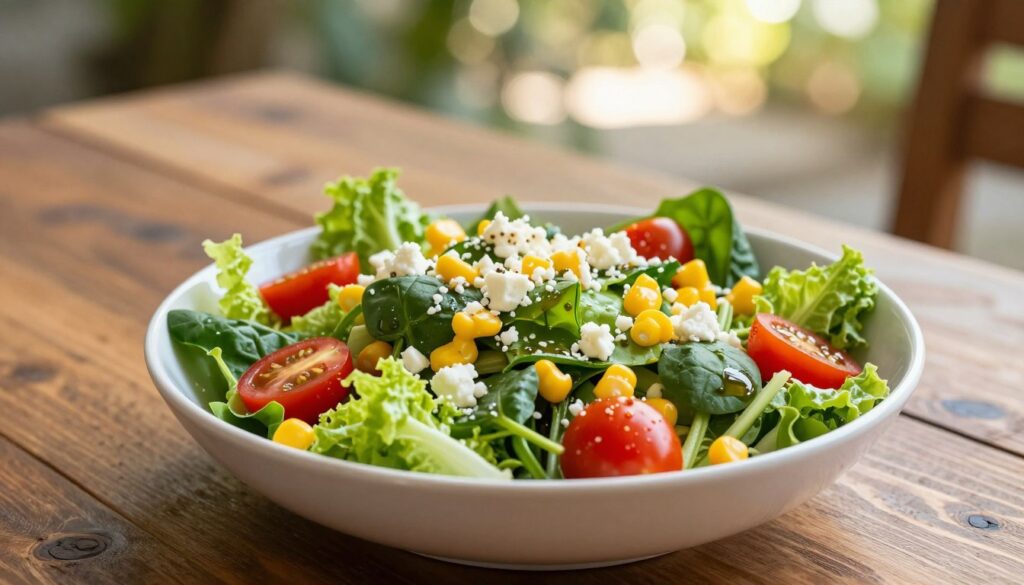
Start by picking a base that sets the tone for the whole meal. The foundation controls bulk, carbs, and much of the sodium. That makes this choice the easiest place to lower energy without losing flavor.
Flour tortilla vs corn tortillas: calories and allergens
A standard flour tortilla adds about 320 calories and contains wheat/gluten. That one item can push a wrap well into higher energy and salt ranges.
Three corn tortillas total roughly 80 calories. Corn shells cut calories and make portioning obvious. Note: corn can matter for corn-sensitive diners.
Romaine and the salad base: why greens save energy
A salad base (romaine) is roughly 15 calories. Romaine as a topping adds about 5 calories per serving and brings crunch and volume.
Choosing a bowl or salad base is almost “calorie-neutral” compared to a flour wrap. That frees room for savory protein, fresh salsas, and the toppings you actually taste.
- Pick a base to control major calorie drivers quickly.
- Flag allergens: flour has wheat/gluten; corn items may affect corn-sensitive guests.
- Ordering line to try: “salad base, extra romaine, and fajita veggies.”
- Family tip: mix bases so everyone shares toppings without extra work.
| Base | Approx. Calories | Allergen Notes |
|---|---|---|
| Flour tortilla (wrap) | 320 | Contains wheat/gluten |
| Corn tortillas (3) | 80 | Corn; lower calories |
| Salad base (romaine) | 15 | Minimal; adds volume |
Protein Calories & Macros: Chicken, Steak, Barbacoa, Carnitas, Sofritas
Your protein choice is the anchor; it decides whether the meal is lean, rich, or somewhere in between.
Lean picks for high protein with fewer calories
Chicken and steak give you the most protein per serving. Chicken is the leanest at 180 cal and 32g protein with 310mg sodium. Steak is slightly lower in calories at 150 and offers 21g protein with 330mg sodium.
Higher-fat options and saturated fat risk
Carnitas and brisket bring richer flavor and more fat. Carnitas is 210 cal and 23g protein with 450mg sodium. Adding cheese or sour cream pushes saturated fat up fast. Watch those extras if saturated fat is a concern.
Plant-based choices and limited-time proteins
Sofritas fits vegan builds but is lower in protein (150 cal, 8g) and higher in sodium (560mg). Note soy if you have an allergy. LTOs like chicken al pastor, honey chicken, and smoked brisket shift totals — brisket is the heaviest at 280 cal and 22g protein with 610mg sodium.
| Protein | Calories | Protein (g) | Sodium (mg) |
|---|---|---|---|
| Chicken | 180 | 32 | 310 |
| Steak | 150 | 21 | 330 |
| Barbacoa | 170 | 24 | 530 |
| Carnitas | 210 | 23 | 450 |
| Sofritas (soy) | 150 | 8 | 560 |
Simple rule: pick one protein anchor first, then build the rest to hit your targets. Use a nutrition tool for precise chipotle nutrition totals when you need it.
Rice & Beans: White Rice, Brown Rice, Black Beans, Pinto Beans
Rice and beans set the stage for how filling and balanced your bowl will feel.
Carb control: white rice vs brown rice vs skip rice
White rice and brown rice are about the same energy per serving: 210 cal each. White rice has roughly 40 g of carbs. Brown rice has slightly fewer carbs at 36 g.
Brown rice often feels more filling. It has a denser texture and a touch more fiber. That can help you eat less later in the day.
Skip rice on low-carb or keto days. Replace bulk with fajita veggies and extra romaine to keep volume without the starch.
Fiber and fullness: why beans matter per serving
Black beans and pinto beans are both 130 cal per serving. Each adds about 8 g of protein. They also supply fiber that extends fullness.
Beans act as a macro helper. Adding them makes a bowl feel complete without piling on more rice or chips.
Easy swaps that protect macros without shrinking your meal
- Half rice + full beans keeps carbs in check while adding protein.
- Beans + extra fajita veggies preserves bulk and fiber.
- Brown rice “light” plus double veggies gives texture with fewer carbs.
- Family tip: one person can take rice, another can skip—share salsas and toppings.
| Item | Per serving (cal) | Notes |
|---|---|---|
| White rice | 210 | ~40 g carbs; quick energy base |
| Brown rice | 210 | ~36 g carbs; more filling, slightly more fiber |
| Black beans | 130 | 8 g protein; adds fiber and satiety |
| Pinto beans | 130 | 8 g protein; similar sodium to black beans |
For exact portion numbers, check the official nutrition facts before you order.
Salsas & Veggies: Fresh Tomato Salsa, Roasted Chili-Corn Salsa, Fajita Veggies
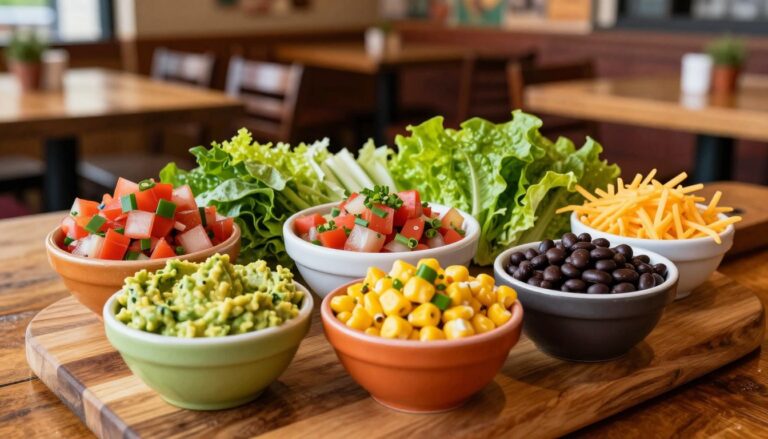
Fresh salsas and grilled veggies bring big flavor with very little bulk. They let you add punch without leaning on creamy or fried extras.
Fresh tomato and tomatillo salsas: flavor with minimal impact
Fresh tomato salsa is light at about 15 cal per serving but can carry sodium near 500 mg. Tomatillo‑green salsa is also 15 cal and is the lower‑sodium pick (≈260 mg).
Tomatillo‑red runs slightly higher at 30 cal and around 500 mg sodium. Use these salsas to punch flavor without adding fat.
Roasted chili‑corn salsa: hidden carbs to watch
Roasted chili‑corn salsa is tastier and denser. One serving adds about 80 cal and 16 g carbs with ~340 mg sodium.
If you want corn salsa, cut back on rice or chips that day to balance carbs.
Fajita veggies: low‑cal volume upgrade
Fajita veggies add color and chew for only 20 cal and about 160 mg sodium. Pair them with fresh tomato salsa for a classic taste.
- Combo idea: fajita veggies + tomatillo‑green salsa for a lighter sodium profile.
- Tip: use salsa as your main flavor tool and skip heavier toppings when possible.
| Item | Per serving (cal) | Sodium (mg) |
|---|---|---|
| Fresh tomato salsa | 15 | ~500 |
| Tomatillo‑green salsa | 15 | ~260 |
| Roasted chili‑corn salsa | 80 | ~340 |
| Fajita vegetables | 20 | ~160 |
Toppings & Extras: Cheese, Sour Cream, Guacamole, Lettuce, Queso
Toppings are where flavor and hidden energy meet—small scoops add up fast.
Pick your extras with the same care you give protein and rice. A little dairy or a half‑cup of guacamole changes totals quickly. Lettuce gives crunch for almost no cost.
Dairy add-ons and saturated fat
Cheese and sour cream are modest portions but pack saturated fat. One scoop of cheese is about 110 calories and 9g fat. Sour cream matches that at 110 calories and 9g fat.
Ask for “light cheese” or “sour cream on the side” to keep saturated fat lower while still enjoying the taste.
Guacamole: healthy fat vs calorie creep
Guacamole is a high‑quality fat choice. It adds about 230 calories and roughly 370 mg sodium per serving.
For balance, order “half guac” or share it. That way you get the flavor and heart‑healthy fats without overshooting your plan.
Queso and where sodium stacks up
Queso blanco is the biggest topping jump: about 240 calories and 510 mg sodium per scoop. Combine queso with salty salsas and beans and sodium climbs fast.
If sodium is a concern, skip queso or ask for a smaller portion and rely on fresh salsas for punch.
- Lettuce (romaine) = 5 calories. Use it to add volume and keep plates feeling full.
- Weight‑loss tip: lighter dairy choices and extra lettuce help cut energy without losing comfort.
- Muscle‑gain tip: keep protein front and center; measure toppings so they don’t replace protein calories.
- Sodium watch: avoid queso + salty salsa combos when you want a lower sodium meal.
| topping | per serving (cal) | sodium (mg) |
|---|---|---|
| cheese | 110 | 180 |
| sour cream | 110 | 30 |
| guacamole | 230 | 370 |
| queso blanco | 240 | 510 |
| romaine lettuce | 5 | minimal |
Chips, Sides, and Dressings: The Biggest Calorie Traps (and Smart Alternatives)
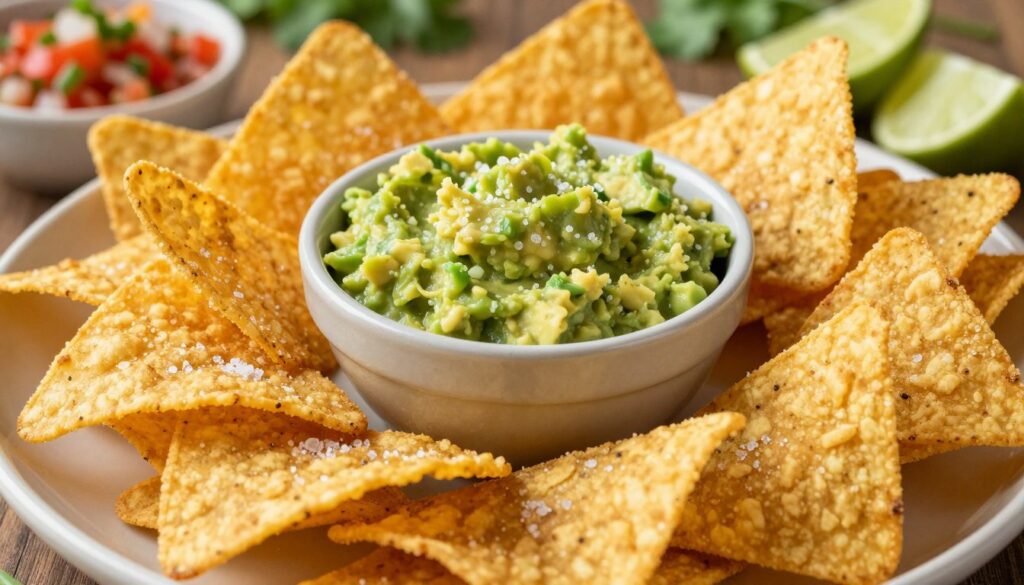
Small sides often carry the biggest surprises for both energy and sodium. A single bag of chips is tasty and shareable. But it alone adds 540 calories and a lot of salt.
Chips with salsa, guacamole, or queso
Compare typical pairings so you see how fast totals climb.
- Chips alone: 540 kcal.
- Chips + tomato salsa: 565 kcal (sodium rises sharply).
- Chips + guacamole: 770 kcal.
- Chips + queso: 780 kcal.
Dressings and newer dips
Dressings can be the real surprise on a salad. Vinaigrette runs about 260 kcal and ~1,170 mg sodium for a small container.
Adobo ranch (2026) is roughly 100 kcal per tablespoon and ~280 mg sodium. It also contains milk allergens, so keep that in mind.
Portion tactics that actually work
You don’t need to skip treats. Try these practical moves instead.
- Share chips or order a small portion. Put half away before you start.
- Choose salsa as your main extra instead of queso or full guacamole.
- Dip consciously: only dip bites you plan to eat to slow down intake.
| Item | Approx. Energy | Notes |
|---|---|---|
| Chips | 540 kcal | Delicious and easy to overeat |
| Chips + guacamole | 770 kcal | High fat; share or order half |
| Vinaigrette (container) | 260 kcal | Very high sodium for small portion |
| Adobo ranch (1 tbsp) | 100 kcal | Moderate energy; contains milk |
Build Healthier Chipotle Orders by Goal: Weight Loss, Muscle Gain, Keto, Vegan
Building smarter orders starts with one clear question: what is your goal today?
Low-cal salad bowl builds that still hit strong protein
Try a salad bowl with chicken, extra fajita veggies, and fresh tomato salsa. Skip dressing. This keeps the plan around 395 calories with ~40g protein and ~900mg sodium.
High-protein burrito bowl builds
For muscle gain, pick a burrito bowl with double chicken, beans, fajita veggies, and tomato salsa. Expect about 680 calories and ~64g protein with ~1,200mg sodium.
Keto-friendly bowls under low net carbs
Skip rice and beans. Use steak, cheese, guac, red salsa, and romaine. A keto-style bowl lands near 545 calories and ~35g protein with ~1,100mg sodium.
Vegan builds and sodium tips
Make a vegan bowl with sofritas, brown rice, black beans, fajita veggies, and roasted chili-corn salsa. It runs around 610 calories but watch sodium (~1,400mg). Ask for light salsa or skip extras.
Whole30 / paleo-style builds
Keep it simple: protein + fajita veggies + salsa + guac over greens. Ask for “sour cream on the side” or “skip queso today” to stay compliant and still feel satisfied.
| Goal | Build | Approx. Energy | Notes |
|---|---|---|---|
| Weight loss | Salad bowl, chicken, fajita veggies, tomato salsa | ~395 kcal | High protein; skip dressing |
| Muscle gain | Burrito bowl, double chicken, beans, fajita veggies | ~680 kcal | ~64g protein; intentional calories |
| Keto | Bowl, steak, cheese, guac, romaine | ~545 kcal | Low net carbs; higher fat |
| Vegan | Bowl, sofritas, brown rice, black beans, fajita veggies | ~610 kcal | Watch sodium; choose light salsa |
Sodium, Allergens, and Dietary Filters in the Chipotle Nutrition Menu
Small choices at the line—salad base, lighter salsa, no queso—change your daily sodium a lot.
How to keep a meal under 1,000mg using salads and lighter salsas
Start with a salad base and skip the flour tortilla. A flour tortilla adds about 670 mg of sodium by itself. Choosing chicken (≈310 mg) and tomatillo‑green salsa (≈260 mg) keeps totals lower.
Swap fresh tomato salsa (≈500 mg) for tomatillo‑green when you need a lighter salt profile. Ask for dressing on the side and skip queso to stay under 1,000 mg.
Allergen flags that matter most
Watch these common triggers: wheat/gluten in flour tortillas, milk in cheese and sour cream, soy in sofritas, and corn in chips and corn salsa.
Cross-contact happens. If you are gluten sensitive, ask staff to change gloves and use a clean surface when assembling your salad.
Dietitian-style ordering guardrails for frequent diners
Willow Jarosh, MS, RD, notes many items are high in salt. Rotate lower-sodium builds and save chips as an occasional treat. Balance the rest of your day if you eat out often.
- Use the nutrition filters before you order to hide allergens and compare sodium.
- Keep a repeatable low-sodium build: salad, chicken, fajita veggies, tomatillo‑green salsa.
- When in doubt, ask for “light” portions of cheese or salsa to cut salt without losing flavor.
| Item | Sodium (mg) | Why it matters |
|---|---|---|
| Flour tortilla | ~670 | Major single source of sodium |
| Chicken | ~310 | Lower-sodium protein option |
| Tomatillo‑green salsa | ~260 | Better salsa choice for lower salt |
| Fresh tomato salsa | ~500 | Flavorful but higher sodium |
How Accurate Are Chipotle Calories? Official Data vs Portion Variability
You can use the published figures as a map, but local portions redraw the route. Official numbers give a clear baseline. Still, what you receive can land a bit higher or lower depending on who’s scooping.
Why portions can vary by about 20% location to location
Estimates may shift roughly 20% from one location to another. That variance shows up when staff use slightly larger or smaller scoops. A 20% change is meaningful for both calories and carbs.
Where discrepancies happen most: rice scoops and guacamole
Rice is a common swing item. A heavier rice scoop adds noticeable calories and extra carbs even when the bowl looks the same.
Guacamole is calorie-dense. Scoop size differences make it a frequent source of surprise.
Best practice: cross-check calculator totals with the app and request “light” portions
Use a nutrition calculator, then confirm totals in the app before you order. Ask for “light rice” or “light guac” when you want smaller portions.
- Order the same build for consistency.
- Request light portions to trim swings.
- Track trends, not one single meal.
| Item | Typical swing | Why it matters |
|---|---|---|
| Rice | ±20% | Affects carbs and total calories most |
| Guacamole | ±15–25% | High energy per scoop; easy to overshoot |
| Toppings overall | ±10–20% | Small extras add up quickly |
Takeaway: small adjustments and repeatable orders cut surprises. You can eat confidently when you aim for consistency.
Real-Time Menu Pricing, Rewards, and Catering: Planning Meals and Budgets
Use the app checkout as your truth source: it shows exact prices, available promos, and any delivery fees for your location right now.
Why prices vary and how to check them
Prices change by region because labor, rent, and local taxes differ. The app or website pulls the live rate for your store. Always confirm totals at checkout before you pay.
Delivery promos and timing
Limited offers can lower or remove fees. Example: Chicken al Pastor had $0 delivery fee via app/website 2/14–2/28/26 under specific conditions. Watch dates, minimums, and platform restrictions.
Catering and group nutrition planning
Plan per person: most catering starts near $8.25/person and scales up. Count protein and veggies first, then add shared sides. Pre-portion chips and queso. That trims extra sodium and excess calories for the group.
| Build | Estimate | Notes |
|---|---|---|
| Salad bowl | $8–$12 | Low base, add protein |
| Burrito | $9–$13 | Wrap adds cost |
| Catering per person | $8.25+ | 24 hr notice; 6–200 people |
Tip: order via the app to save builds, earn rewards, and track nutrition for repeat meals.
Eat Confident at Chipotle: Your Fast Checklist for Smarter Calories
Keep this quick checklist in your back pocket for smarter orders every time you stand in line.
Pick a base: salad or bowl first. Skip the flour wrap when you want fewer calories and less sodium.
Protein-first: choose chicken or steak to stay satisfied without runaway energy. Add rice or skip it. Add beans if you want more fiber and fullness.
toppings check: pick one rich add-on — cheese or sour cream — rather than stacking extras. Ask for “light” rice or light cheese if portions feel heavy.
sodium checkpoint: remember tortilla, chips, and queso drive salt. Choose lighter salsas to keep totals lower.
You can enjoy your favorite build and stay in control—one clear choice at a time.