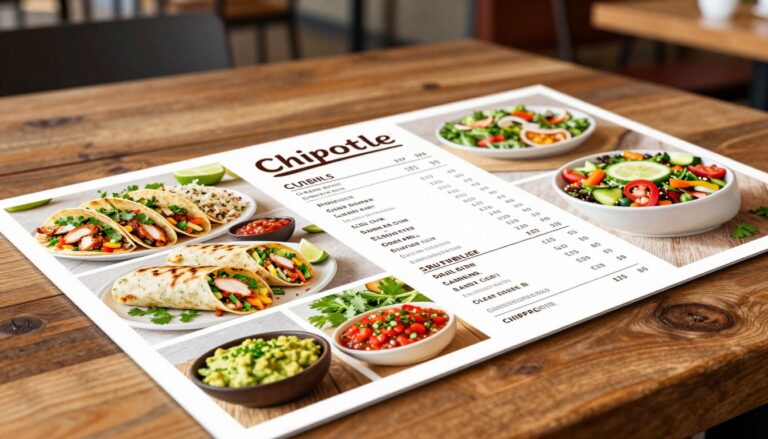
Chipotle Toppings Menu
You build a great bowl by layering simple parts: a base, a protein, salsas, and creamy add-ons. This guide helps you pick combinations that fit your taste, budget, and daily nutrition goals.
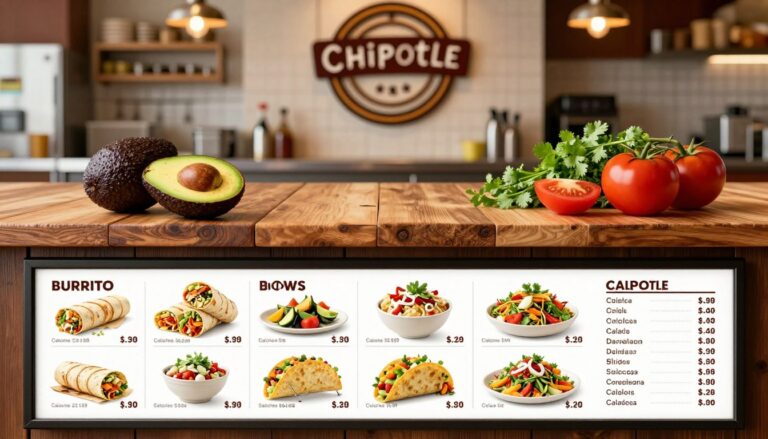
In the U.S., entrée formats and calorie ranges vary: Burrito Bowl 420–910 cal, Burrito 740–1210 cal, Tacos (3) 390–1140 cal, Salad 420–910 cal. Two orders that look the same can differ by portions and prep. That’s why calories can shift from one visit to the next.
We’ll walk you through format first, then base layers, protein, the flavor stack, and finally sides and drinks. You’ll also see practical numbers for common ingredients so you can make confident swaps.
Remember: offerings vary by location and menu boards are the final word, especially for limited-time items. Think of this as a friendly map for personalizing comfort food — easy to follow and impossible to fail.
How Chipotle customization works right now in the United States
Start by picking a format—you’ll shape the whole meal from that one choice. That first decision determines portions, whether you need a tortilla, and how the flavors stack.
Choose your format: burrito, burrito bowl, tacos, or salad
Pick a burrito for handheld ease. Choose a burrito bowl if you want flexibility and no tortilla. Tacos come as three tortillas—crispy corn or soft flour—with meat, salsa, cheese or sour cream, and romaine.
What to know about portions, calories, and why they can vary
Calories vary by location and portioning. Rice, cheese, sour cream, and vinaigrette can shift numbers fast. Recipes, seasons, and sourcing also change totals over time.
| Format | Calories (U.S.) | Best for |
|---|---|---|
| Burrito | 740–1210 | Handheld convenience |
| Burrito bowl | 420–910 | Flexible, tortilla-free |
| Tacos (3) | 390–1140 | Mixing textures; choose corn or flour |
| Salad | 420–910 | Lighter, greens-forward |
Quick tips: ask for light rice, extra fajita veggies, or salsa-forward builds when you place an order. Decide early if you want chips as a side—regular chips run about 540 calories and they can double the meal feel.
Offerings change. Always check the in-store board or the brand site for current nutrition and allergens, or try the new build-your-own order details before you go.
Chipotle Toppings Menu: pick your base layers first
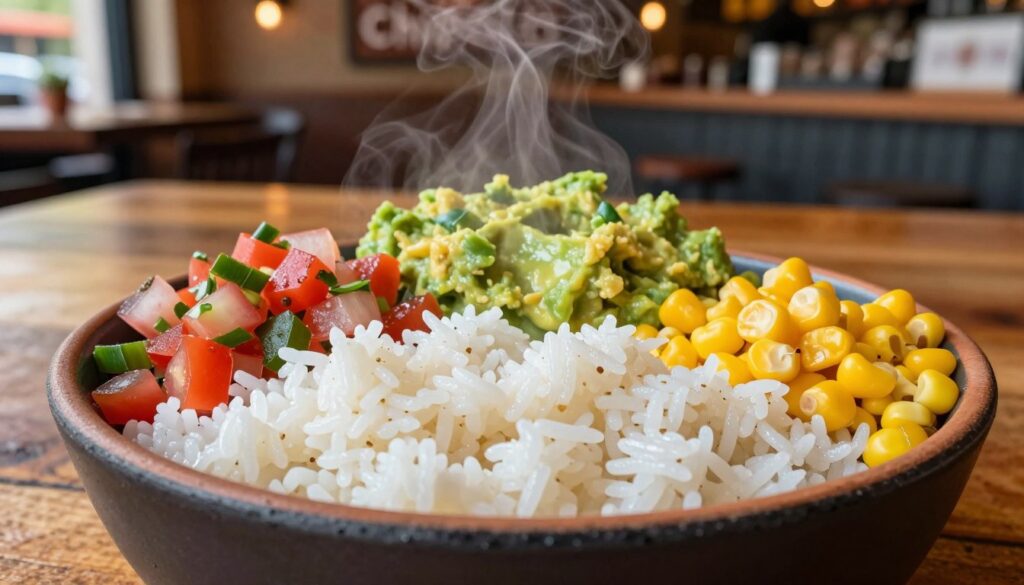
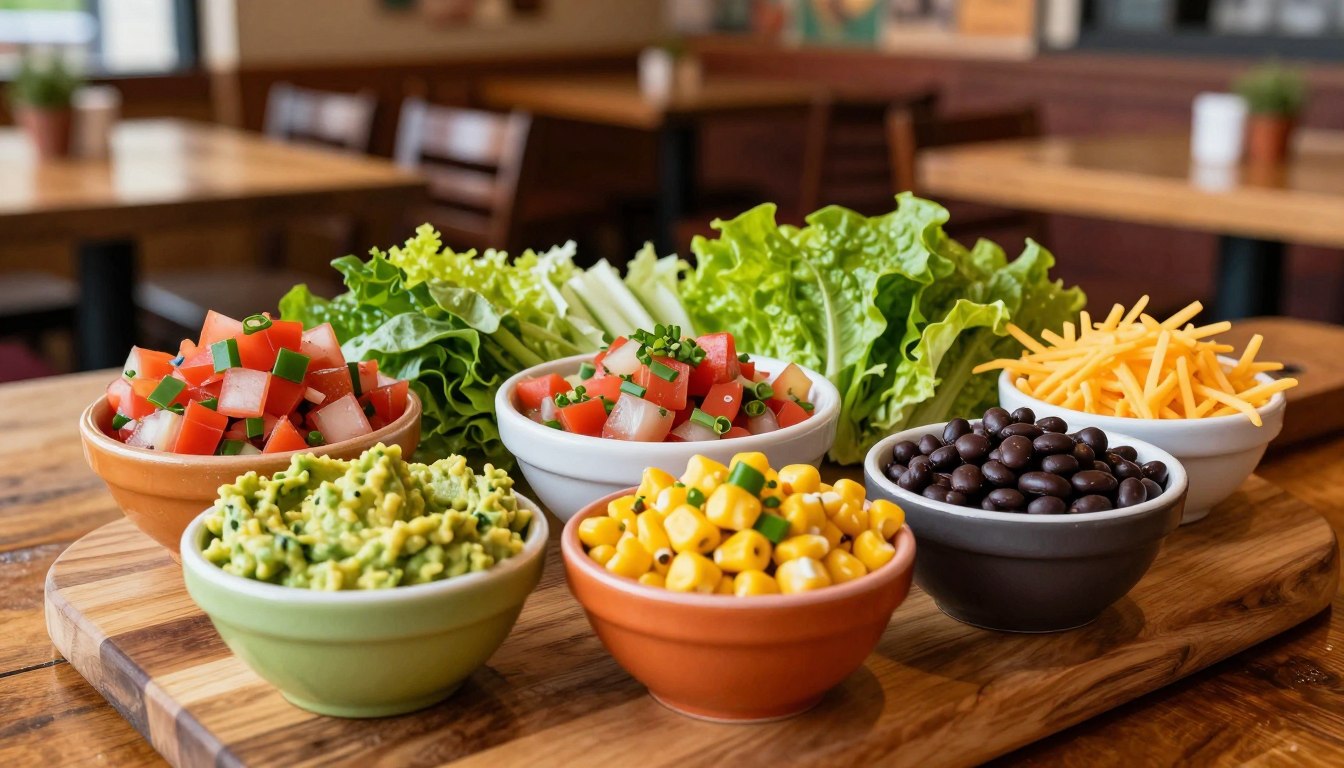
Set a sturdy base first—it’s the part that keeps every bite balanced. The right foundation gives texture and satiety so your add-ons can sing.
Rice options: Cilantro-Lime White Rice vs Cilantro-Lime Brown Rice
Both white rice and brown rice are 210 calories per 4 oz. The choice often comes down to taste and chew. White rice offers a softer mouthfeel. Brown rice gives nuttier texture and a fuller grain bite.
Beans for flavor, fiber, and protein
Black beans and pinto beans both clock 130 calories per 4 oz. Pick black beans for a richer, earthier taste. Choose pinto for a creamier, mellow profile that pairs well with tomato salsas.
Fajita veggies and tortillas
Fajita veggies add bulk with little cost—about 20 calories per 2 oz. They bring color, crunch, and extra veggies without heavy calories.
Tortilla choices change the meal baseline. A burrito flour tortilla is about 320 calories. Taco flour tortillas run ~80 cal each; crispy corn tortillas are ~70 cal. Decide soft flour or corn based on texture and how portable you want the meal.
- Order flow: pick rice, pick beans (or both), add fajita veggies, then confirm tortilla style.
- Note: portions vary by location; use these numbers for comparison and smart swaps.
Dial in your protein choice for taste and nutrition goals
Your protein choice defines the meal’s flavor, texture, and how long it keeps you satisfied.
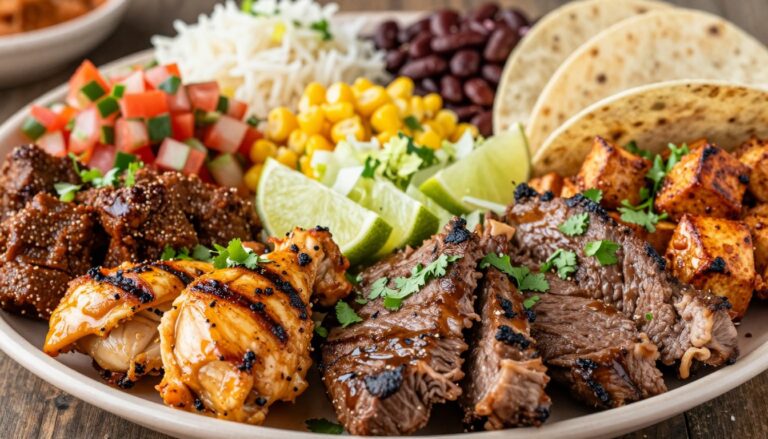
Classic meats offer clear differences. Chicken is grilled and marinated in chipotle adobo, about 180 calories per 4 oz. Steak is also grilled in adobo and runs roughly 150 calories per 4 oz. Barbacoa is braised and shredded, about 170 calories. Carnitas are braised and richer at 210 calories.
Plant-based picks are solid, too. Sofritas are an organic protein braised with chipotle chilis and roasted poblanos — 150 calories per 4 oz. The Veggie option includes fresh guacamole plus your choice of beans and comes in around 230 calories per 4 oz.
| Protein | Style | Calories / 4 oz |
|---|---|---|
| Chicken | Grilled, adobo | 180 |
| Steak | Grilled, adobo | 150 |
| Barbacoa | Braised, shredded | 170 |
| Carnitas | Braised, shredded | 210 |
High-protein ordering strategies
- Double a protein when you want extra grams without many swaps.
- Add beans for protein and fiber; they boost value for families and kids.
- Choose a bowl so you can load veggies and salsa and skip a tortilla.
Keep it practical: portions vary by location, so use these numbers to compare items and order with confidence.
Build the flavor stack with salsas, dairy, and fresh toppings
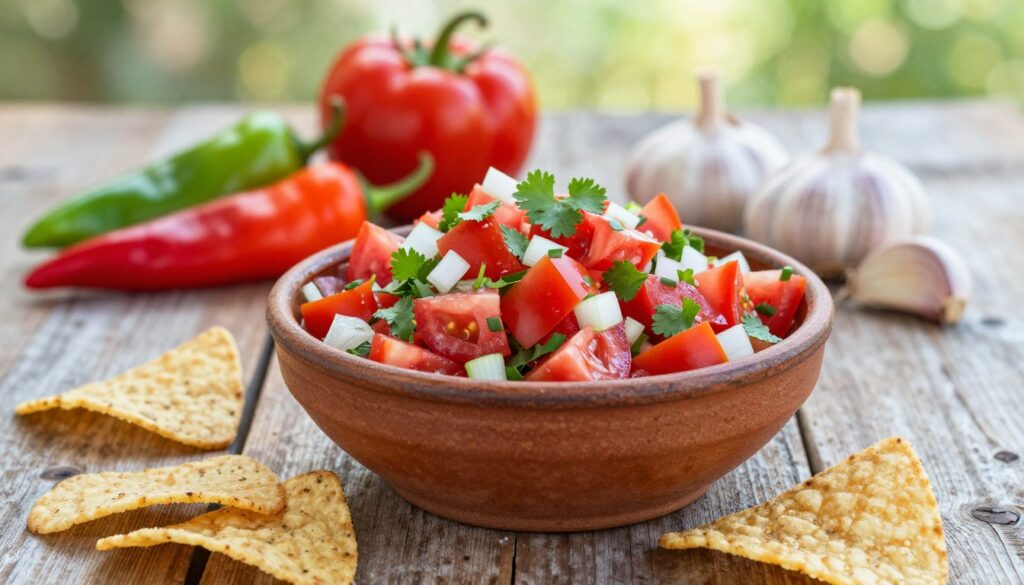
Layering bright salsas, creamy add-ons, and crisp greens makes each bite sing. Start with a salsa for brightness, add a creamy binder if you want richness, then finish with lettuce or salad greens for crunch.
Fresh Tomato Salsa for a lighter, bright topping
Fresh tomato salsa is a light choice at 25 cal per 4 oz. It lifts heavier ingredients and keeps a bowl tasting fresh. Use it as your default when you want brightness without extra calories.
Roasted Chili-Corn Salsa for sweet heat and texture
Roasted chili-corn salsa brings sweet heat and crunch. It runs about 80 cal per 4 oz. Pick it when you want texture and a bolder forkful.
Tomatillo green vs tomatillo red
Tomatillo-green is tangy and bright (15 cal per 2 oz). Tomatillo-red reads warmer and deeper (30 cal per 2 oz). Choose green for zip, red for heat and body.
Cheese, sour cream, queso, guacamole, and greens
Cheese adds 110 cal per 1 oz and sour cream 110 cal per 2 oz. They mellow spice and help bind rice and beans.
Queso Blanco (120 cal per 2 oz) is a lighter, melty pick. Guacamole (230 cal per 4 oz) is richer and more filling. Romaine is just 5 cal per 1 oz; the supergreens mix (chopped romaine + baby kale + baby spinach) runs 15 cal per 3 oz.
Chipotle-Honey Vinaigrette is 220 cal per 2 oz—powerful in small doses. Ask for it on the side to control the pour.
| Item | Role | Calories |
|---|---|---|
| Fresh tomato salsa | Bright lift | 25 cal / 4 oz |
| Roasted chili-corn salsa | Sweet heat + texture | 80 cal / 4 oz |
| Tomatillo-green / Tomatillo-red | Bright vs warm | 15 cal / 2 oz • 30 cal / 2 oz |
| Queso Blanco / Guacamole | Creamy add-on | 120 cal / 2 oz • 230 cal / 4 oz |
Practical tip: go salsa-forward for a lighter build. Choose cheese, sour cream, or queso when you want comfort food. Finish with lettuce or the greens mix to add crunch and balance the richer ingredients.
Make it work for your diet: lower carb, gluten-free, dairy-free, and more
Make your meal fit your goals with a few simple swaps that keep flavor high and carbs low. Start with a high-protein base. Add veggies for bulk and choose salsas for brightness instead of creamy add-ons.
Lower-carb builds
Pick a bowl and skip the flour tortilla. Ask for extra fajita veggies (20 cal per 2 oz) for volume. Limit rice or ask for a light portion to lower carbs without losing texture.
Dairy-free orders
Go salsa-forward and leave out cheese, sour cream, and queso. Fresh tomato salsa and tomatillo salsas add flavor for 15–30 cal per serving. Finish with romaine or the greens mix for crunch.
Gluten-free considerations
Bowls are the easiest gluten-free route. If you need a tortilla, choose corn and check ingredients. Before you place an order, tell the crew about any allergy so they can confirm procedures.
| Goal | Smart swap | Calorie note |
|---|---|---|
| Lower-carb | Bowl + extra fajita veggies | Fajita veggies 20 cal / 2 oz |
| Dairy-free | Salsa-forward, skip cheese & queso | Salsa 15–80 cal per portion |
| Gluten-free | Bowl or corn tortilla; confirm ingredients | Rice 210 cal; beans 130 cal per 4 oz |
Quick script to use at the counter: “I have a food allergy—can you confirm all ingredients and prep steps before I order?” Find tailored allergen tools at chipotle.com/allergens.
Order like a pro: sides, drinks, and finishing touches that round out the meal
Small finishing choices shape whether a quick lunch stays light or turns indulgent. Pick a side that fits your plan and portion it for the table when you can.
Chips alone are about 540 cal (serves 2). Chips & salsa run 560–620 cal. Chips & queso blanco are 780 cal regular, 1290 large. Chips & guacamole sit near 770 cal regular and 1270 large. Queso side is ~240 cal; guacamole is 230 cal per 4 oz.
Match add-ons to your protein. If you order chicken or steak with adobo, skip extra chips and add beans or lettuce for balance. For sofritas or a burrito bowl, salsa + a small guacamole keeps flavor without heavy extras.
Order online at chipotle.com or in the app to customize easily. For groups, the Build-Your-Own Sofritas feeds 4–6 and includes chips, tortillas, rice, beans, dips, and guac or queso.