How To Make Panda Express Orange Chicken
You are about to recreate a beloved takeout treat at home. Expect crisp chicken bites in a glossy, tangy sauce that echoes the original. The goal is familiar flavor made with pantry ingredients you can find in U.S. grocery stores.
This copycat recipe maps the whole dinner plan in clear steps. Prep, fry, and finish the sauce in minutes so you can time dinner without stress. You will see an exact ingredients list and a simple, safe method for frying in batches.
The guide highlights small techniques that matter. You will learn how to keep the coating crisp, how to test oil temperature, and how to thicken the sauce so it clings without getting gummy.
You can adjust sweetness, heat, and citrus to suit your family. Follow the steps and tips here and you will get the classic takeout feel with home-cooked control.
What Panda Express Orange Chicken Is and Why the Copycat Works
A food-court classic was born when Chinese flavors met U.S. diner habits. Chef Andy Kao invented the signature dish in 1987. The result is an American-Chinese creation that favors bold, simple tastes over regional tradition.
American-Chinese roots and the sweet-tangy-spicy balance
This style emphasizes bright sugar, sharp vinegar, and a mild chili note. Adjust sugar, rice vinegar, and chili flakes and you change the overall flavor quickly.
The signature “crisp-then-gloss” restaurant style
The classic plate starts with crunchy fried pieces. Then a glossy sauce is tossed on at high heat so the coating stays crisp while the sauce clings.
- Why the copycat works: fresh orange juice plus zest gives bright citrus.
- Soy sauce and a cornstarch slurry create that shiny, clingy sauce finish.
- Technique preview: fry for crunch, flash-sauté aromatics, then toss quickly in sauce.
| Element | What to aim for | Why it matters |
|---|---|---|
| Crisp coating | Golden, light | Holds sauce without sogginess |
| Sauce | Bright, glossy | Balances sweet, tangy, and mild heat |
| Timing | Fast toss | Keeps texture |
Ingredients You’ll Need for Crispy Fried Chicken and Orange Sauce
Start with a clear ingredients list so every bite turns out balanced and bright.
Choose your protein: chicken thighs give juicier results and tolerate slight overcook without drying. Chicken breast yields a leaner bite and cooks faster. Cut either into even, bite-size pieces for steady frying and an even sauce ratio.
Breading essentials
You’ll need an egg wash, plus a mix of flour and cornstarch. Salt and white pepper season the dredge. Cornstarch is key — it creates that light, takeout-style crisp.
Sauce essentials
Orange juice and orange zest supply citrus body and aroma. Soy sauce adds savory depth while brown sugar and a splash of vinegar bring gloss and tang. Water helps control thickness before adding a cornstarch slurry.
Aromatics, heat, and finish
Ginger and garlic are the flavor backbone; a pinch of red chili flakes adds gentle heat. Finish with a drop of sesame oil and a sprinkle of sesame seeds for aroma and a final restaurant touch.
- Zest the orange before juicing and keep zest covered.
- Work with even pieces so frying time stays consistent.
- See the full recipe and timings in this copycat guide: easy homemade copycat recipe.
| Item | Why it matters | Typical amount |
|---|---|---|
| Boneless chicken | Choice affects texture and cook time | 2 lbs |
| Flour + cornstarch | Light, crisp coating | 1 cup + 1/2 cup |
| Orange juice & zest | Bright citrus flavor and aroma | 3/4 cup + 1 tsp zest |
Kitchen Tools and Setup for Fast, Clean Cooking
Choose the right vessel and you control temperature, splatter, and results. A good setup keeps the cook calm and the coating crisp while you work through batches.
Wok, Dutch oven, or deep-fryer — which to pick
Use a wok for quick heat and easy tossing. A heavy Dutch oven holds temperature better. A dedicated deep-fryer gives the steadiest heat and built-in safety features.
Thermometer basics
Clip a candy or probe thermometer to the side and hold the oil at 375°F. That target gives a fast cook time and a crisp finish.
- Fry small batches for 3–4 minutes each. This prevents the oil temperature from crashing.
- Set a station: one bowl for egg, one for dredge, a tray for coated pieces, and a rack or paper towels for draining.
- Measure oil depth so you use only the cup amount needed and avoid waste.
- Line a sheet pan under the rack for easy cleanup and safer handling when serving the dish.
| Tool | Best use | Notes |
|---|---|---|
| Wok | Fast sear and toss | Light splatter, quick heat recovery |
| Dutch oven | Stable frying | Heavy walls keep oil steady; good for batches |
| Deep-fryer | Controlled temperature | Easy thermostat control and filtered oil options |
How To Make Panda Express Orange Chicken
Cutting uniform bites sets you up for golden, evenly cooked results every time.
Cutting chicken into bite-sized pieces for even cook time
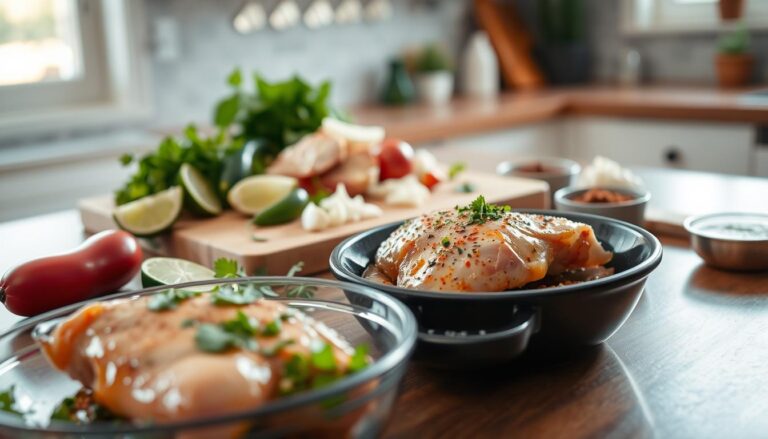
Trim and slice the meat into even chicken pieces, about 1-inch cubes. Even pieces finish at the same time and stay juicy.
Mixing the egg wash and seasoning in a bowl
Whisk egg with a pinch of salt, white pepper, and a teaspoon of neutral oil in a bowl. Toss the pieces in that mixture so the coating will cling.
Dredging with flour and cornstarch for a crisp coating
Combine flour and cornstarch in a shallow dish. Press each piece into the mix, then shake off excess so the crust stays light, not bready.
Frying in batches for golden fried chicken in minutes
Heat oil to 375°F and fry in small batches for 3–4 minutes until golden. Avoid overcrowding so the oil temperature doesn’t drop and the pieces crisp quickly.
Draining and holding so the coating stays crunchy before saucing
Drain on a wire rack or paper towels. Check doneness by color, crispness, and an internal probe if needed. Hold briefly while you finish the sauce, then toss just before serving for the best texture.
| Step | Key cue | Fast tip |
|---|---|---|
| Cut | Uniform 1-inch pieces | Slices lined up for steady cuts |
| Coat | Even flour + cornstarch layer | Shake off excess |
| Fry | 3–4 minutes at 375°F | Work in batches |
Getting the Fry Right: Oil Temperature, Timing, and Batch Size
Keeping oil steady and working in proper batches is the single best way to nail crispy coating every time.
Why overcrowding makes soggy coating
When you crowd the pot the oil temperature drops fast. Steam builds around the pieces. The crust soaks up fat and the result is greasy, limp bites.
Timing and practical batch rules
Fry in small batches so there is space between pieces. Aim for two dozen 1-inch pieces at a time in a large Dutch oven, or fewer in a wok.
Cook each batch about 3 to 4 minutes until golden brown. That time gives a crisp exterior and a juicy center without overcooking.
Best oil choices and recovery tips
Use neutral, high-heat oils like canola, corn, or vegetable. They keep flavor clean and handle 375°F well.
- Wait for the thermometer to climb back before adding the next batch.
- If oil cools, let it recover rather than crowding—this protects texture.
| Problem | Likely cause | Quick fix |
|---|---|---|
| Pale coating | Oil too cool | Raise heat and wait 3–5 minutes |
| Fast browning | Oil too hot | Lower heat 25°F and test |
| Soggy crust | Overcrowding | Reduce batch size; drain on rack |
Orange Sauce Breakdown: Flavor, Sweetness, Tang, and Heat
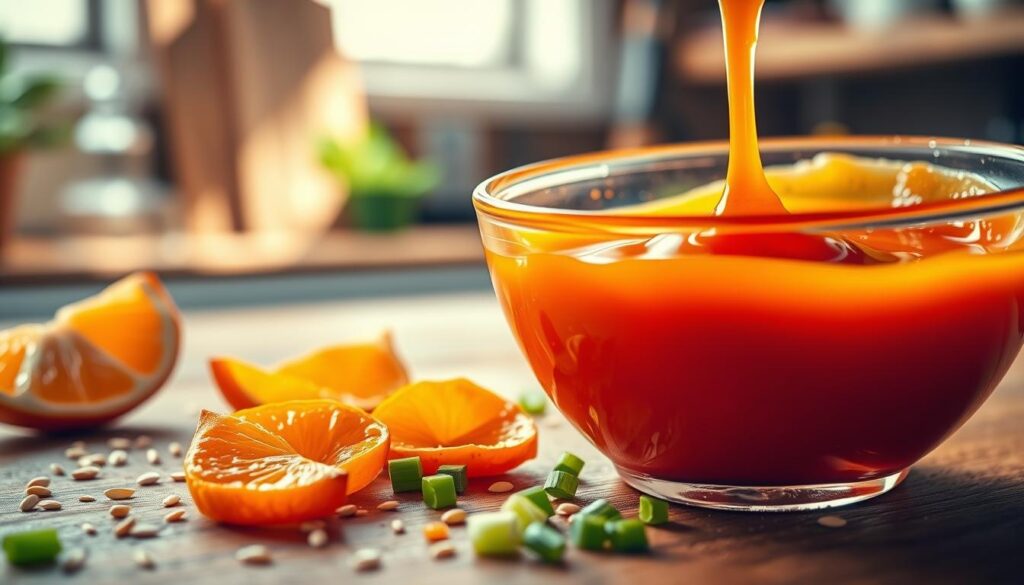
A great sauce balances sweet, tang, and a touch of heat so every bite sings.
Orange juice and orange zest for bright citrus flavor
Use both juice and zest. Juice gives body. Zest gives that sharp aroma that defines panda express orange taste.
Balancing soy sauce, rice vinegar, and sugar
Start with a base of soy sauce, brown sugar, and a splash of rice vinegar. Taste early.
If the sauce reads too sweet, add a little more vinegar. If it seems flat, add a touch more sugar or a few drops of soy sauce for depth.
Building aroma with ginger, garlic, and chili flakes
Sizzle minced ginger and garlic over high heat. Stir briefly until fragrant, then add chili flakes for gentle heat.
Simmer briefly with the citrus base so the flavors meld. Thickness comes later with a cornstarch slurry; focus now on getting the flavor right.
- Bright citrus up front. Savory soy underneath.
- Tang from vinegar; sweetness from sugar; gentle heat from chili flakes.
- Taste and adjust: more sugar for bitter juice, more vinegar for flat sauce.
| Component | Role | Quick tip |
|---|---|---|
| Orange juice | Citrus body | Use fresh for best flavor |
| Orange zest | Fragrance | Add at end for aroma |
| Soy sauce & vinegar | Savory + tang | Balance salt with vinegar |
| Ginger, garlic, chili flakes | Aroma & heat | Sauté briefly, do not burn |
How to Thicken Orange Sauce With Cornstarch (No Lumps)
Getting a smooth, clingy sauce is about mixing cornstarch properly and watching the simmer. Work in short steps and you will avoid grit and cloudiness.
Make a smooth cornstarch-and-water slurry
Measure cornstarch into a small bowl. Add cold water and stir until uniform. Cold water prevents lumps. Stir again right before you pour; the powder settles fast.
When to add the slurry so the sauce turns glossy and coats chicken
Bring the orange sauce to a simmer. Pour the slurry in while stirring. The mixture should thicken in 1–2 minutes. Look for a glossy finish that coats the back of a spoon.
- Simple ratio: 1 tablespoon cornstarch + 1 tablespoon cold water per 1/2 cup sauce.
- Scaling: add another small slurry rather than dumping a full cup cornstarch if you need more body.
- Fix thin sauce with a splash of water. Avoid long boiling—extended time can loosen the glaze.
| Slurry | Use | Thickening time |
|---|---|---|
| 1 tbsp cornstarch + 1 tbsp water | Light coat for 1/2 cup sauce | 1–2 minutes |
| 2 tbsp cornstarch + 2 tbsp water | Medium body for 1 cup sauce | 1–2 minutes |
| 1/4 cup cornstarch + 1/4 cup water | Heavier glaze (use sparingly) | 1–3 minutes |
Tossing Chicken in Sauce Without Losing the Crunch
Timing is the real secret when you combine hot glaze with a crisp crust. The final toss must be fast and intentional so the coating stays crunchy and the flavor is even.
Cleaning the wok, quick stir-fry, then sauce
Clear out excess frying oil. Wipe the wok briefly or use a paper towel held with tongs.
Heat the wok until it flashes hot. Bloom garlic and ginger for just a few seconds. Add the sauce and bring it to a quick simmer.
How long to toss before serving
Add the fried chicken and give a brisk toss. Aim for about 10 seconds of tossing. That is the right time so the coating gets a thin, glossy coat without softening.
- Why it’s a timing game: the crust is crispest before it meets sauce.
- Work quickly: hot sauce, hot wok, quick toss, immediate serve.
- Home workaround: use a wide skillet or a large mixing bowl if you lack a wok.
- Sauce thickness note: a properly thickened sauce forms a thin glaze and won’t soak into the crust.
| Step | Cue | Target time |
|---|---|---|
| Clean wok | Remove excess oil | 30 seconds |
| Add sauce | Bring to simmer | 1 minute |
| Toss chicken | Coat, then serve | 10 seconds |
How to Serve Express Orange Chicken Like Takeout at Home
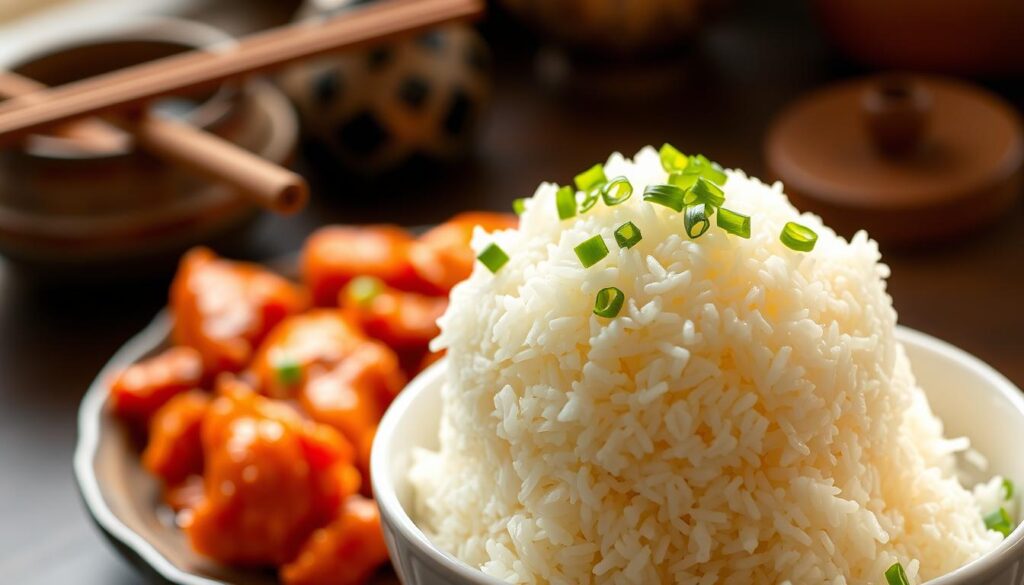
Plate the fried pieces over a fluffy bed of warm rice for immediate comfort. A simple serving routine keeps the texture crisp and the flavors bright. Set the table so everyone can dig in while the glaze still shines.
Classic pairing: jasmine rice that soaks up extra sauce
Use jasmine rice for its fragrant grains. Scoop a generous mound on each plate so the sauce pools without getting watery. Cook 1 cup uncooked rice for every three people as a starting guide.
Garnishes that pop: green onion, sesame, extra zest
Sprinkle sliced green onion and toasted sesame for contrast. A pinch of orange zest brightens aroma and ties the dish together. These small additions lift each bite.
- Side ideas: steamed broccoli, simple cucumber salad, or quick egg rolls.
- Weeknight flow: start the rice cooker, fry in batches, simmer the sauce, then toss and serve.
| Serves | Uncooked rice | Notes |
|---|---|---|
| 2–3 | 1 cup | One generous scoop per plate |
| 4–6 | 2 cups | Family style serving, extra sauce on side |
| 6–8 | 3 cups | Serve rice in a bowl so guests add as they like |
Storing and Reheating Leftovers (So the Texture Stays Good)
A short cooling step keeps the crust crisp and the sauce bright the next day.
Cool the pieces at room temperature for no more than 30 minutes. Transfer into a lidded airtight container so the leftovers stay fresh and the chicken won’t pick up stray fridge odors.
Fridge life and best containers
Refrigerate in a sealed container for 3–4 days. Glass or BPA-free plastic with tight lids works best. Layer paper between pieces if you’re stacking so steam does not soften the crust.
Reheating options and simple timing
Air fryer: 375°F for 4–6 minutes for the best re-crisp. Oven: 400°F for 10–15 minutes on a sheet in a single layer. Skillet: medium heat, a quick toss in a little oil and cover briefly. Microwave softens the coating—use only for speed.
| Method | Temp | Minutes |
|---|---|---|
| Air fryer | 375°F | 4–6 |
| Oven | 400°F | 10–15 |
| Skillet | Medium | 3–5 |
Refreshing the sauce
If the sauce has tightened, loosen it with a splash of water or a little orange juice. Heat gently, stir until glossy, then add the chicken and toss briefly. This keeps the sauce lively without soaking the crust.
This orange chicken recipe is best fresh, but smart storage and reheating save time and keep meals family-friendly.
Ready for Your Next Homemade Panda Express Night
End on a practical note: crisp bites, a glossy sauce, and a quick toss are what bring the familiar takeout feel home.
Adjust the heat, sweetness, and citrus for your family. Small swaps change the flavor. Keep the core steps the same and the result stays true.
Try this checklist next time: zest first, set out bowls for egg and dredge, and fry in steady batches. Use pantry-friendly ingredients like soy sauce, cornstarch, sugar, and fresh orange or juice.
Plan a full homemade takeout night — it’s reliable crowd-pleasing comfort. For a tested version, see this orange chicken copycat recipe.
Last tip: add the sauce and toss at the final second, then serve hot for the best texture.